
Understanding Concrete Spalling Near the Coast: What It Is and Why It Matters for Your Building
Concrete spalling is a common issue for buildings in coastal Florida, particularly in Miami-Dade and Broward counties. This process involves concrete deterioration, often linked to the unique challenges of our saltwater environment, and understanding it is crucial for building safety and longevity.
Concrete spalling is a pervasive and serious concern for buildings throughout coastal Florida, particularly for condominium and co-operative structures in Miami-Dade and Broward counties. This deterioration, which involves concrete breaking away from a structure, is more than just an aesthetic issue; it can signal significant underlying problems that affect a building's safety and longevity.
Understanding what spalling is, why it occurs in our unique environment, and its potential implications is crucial for every board member, owner, and property manager. Proactive identification and professional repair are essential steps in maintaining structural integrity and protecting your building investment.
What Causes Concrete Spalling in Coastal Environments?
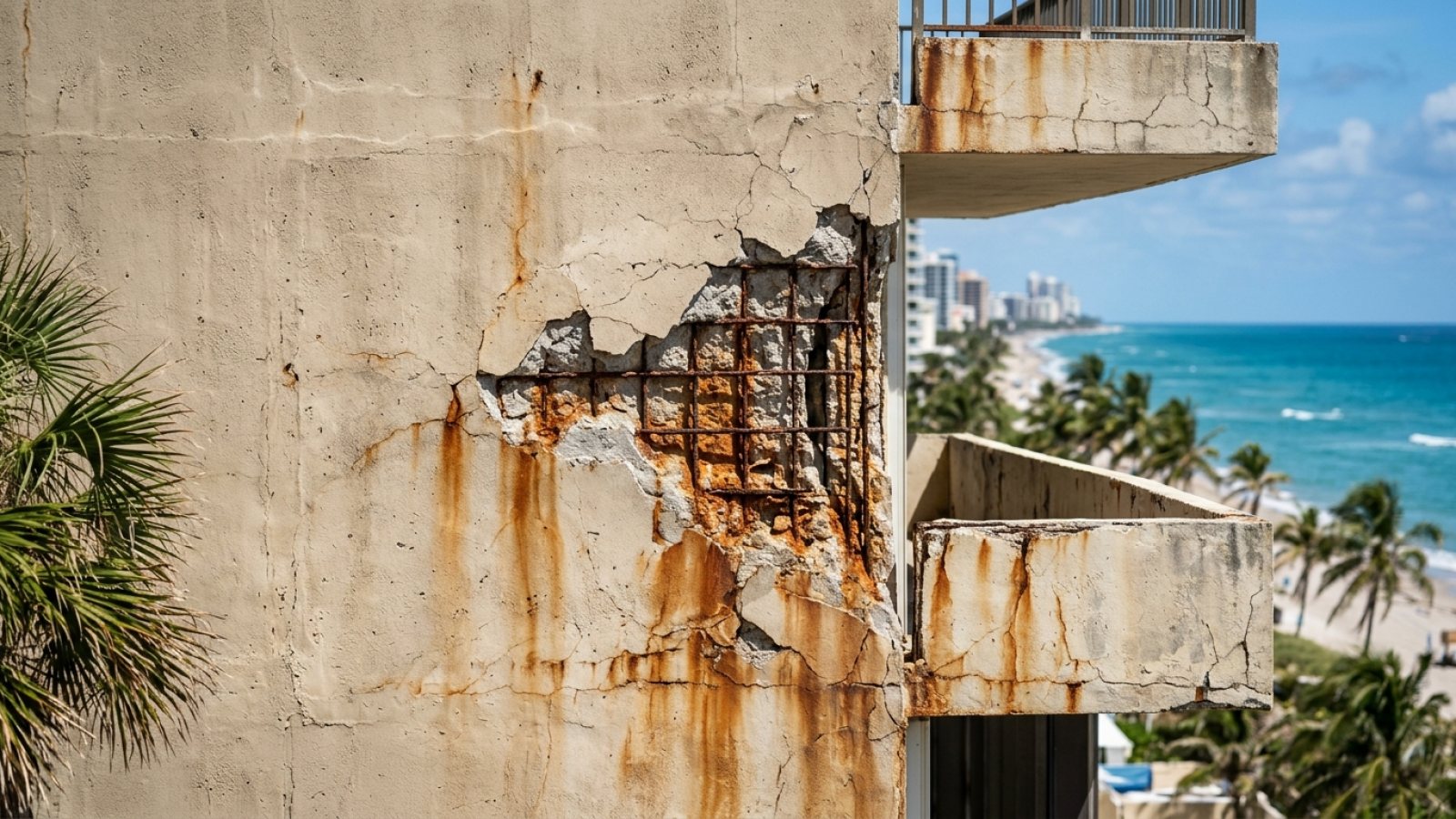
At its core, concrete spalling typically begins when the steel reinforcement bars, or rebar, embedded within the concrete start to corrode. Concrete is naturally porous, and over time, moisture, oxygen, and especially chlorides (salt) can penetrate its surface and reach the rebar. Coastal buildings are relentlessly exposed to these corrosive elements through sea spray, high humidity, and salt carried by the air.
When the rebar rusts, it expands in volume, exerting immense pressure on the surrounding concrete. This pressure causes the concrete to crack, delaminate (separate into layers), and eventually spall or flake off. Other factors contributing to spalling include carbonation, where carbon dioxide from the air chemically reacts with the concrete to reduce its protective alkalinity, and poor original concrete cover or construction practices that leave rebar more exposed.
The combination of constant salt exposure, high humidity, and relentless sun unique to South Florida's climate accelerates this process, making concrete structures particularly vulnerable to this type of deterioration.
Recognizing the Signs of Spalling
Early detection of concrete spalling is key to managing its impact and preventing more extensive damage. Property owners and managers should be vigilant for several common indicators:
- Cracks: Look for hairline cracks or larger fissures, especially those that appear in a spiderweb pattern or run parallel to hidden rebar.
- Rust Stains: Reddish-brown or orange stains on the concrete surface are a tell-tale sign that the rebar beneath is corroding and leaching rust to the surface.
- Bulging or Delamination: Areas of concrete that appear to be swelling, bulging outwards, or sound hollow when tapped can indicate that the rebar is expanding beneath and pushing the concrete away.
- Flaking or Chipping: Small pieces of concrete breaking off, particularly from edges or corners.
- Exposed Rebar: The most obvious sign is when the concrete has completely broken away, leaving the corroded steel reinforcement bars visible.
These signs can appear on balconies, walkways, parking garage slabs, columns, beams, and any other concrete structural elements exposed to the elements. Regular visual inspections by trained personnel or professional engineers can help identify these issues before they escalate.
Why Addressing Spalling Is Critical for Building Safety and Longevity
Ignoring concrete spalling is not an option for responsible building management. The implications of unaddressed deterioration are profound, impacting structural integrity, safety, and financial planning.
The most significant concern is the compromise of a building's structural integrity. As rebar corrodes and concrete spalls, the load-bearing capacity of the affected elements diminishes. This weakening can lead to catastrophic failure, particularly in critical structural components. The tragic collapse of Champlain Towers South in Surfside brought a renewed, urgent focus on structural integrity and building maintenance across Florida, highlighting why conditions like spalling cannot be overlooked.
Beyond structural risks, spalling creates immediate safety hazards from falling concrete fragments, posing a danger to residents, visitors, and property below. From a financial perspective, addressing minor spalling early is far more cost-effective than undertaking major structural repairs and extensive concrete restoration once the damage has spread. Delays can lead to exponentially higher repair costs and potentially significant special assessments for owners.
Furthermore, Florida's building safety laws now require milestone structural inspections for many buildings, and addressing documented concrete deterioration is a mandatory component of maintaining compliance with county recertification programs and state regulations.
For these reasons, building boards and managers in Miami-Dade and Broward counties must prioritize regular assessments for concrete spalling. When signs of deterioration are present, it is imperative to engage a licensed structural engineer to evaluate the extent of the damage, recommend appropriate repair strategies, and oversee the restoration work. Proactive maintenance and timely, professional repairs are the strongest defenses against the unique challenges of coastal concrete degradation, ensuring the safety and long-term viability of your building.
