
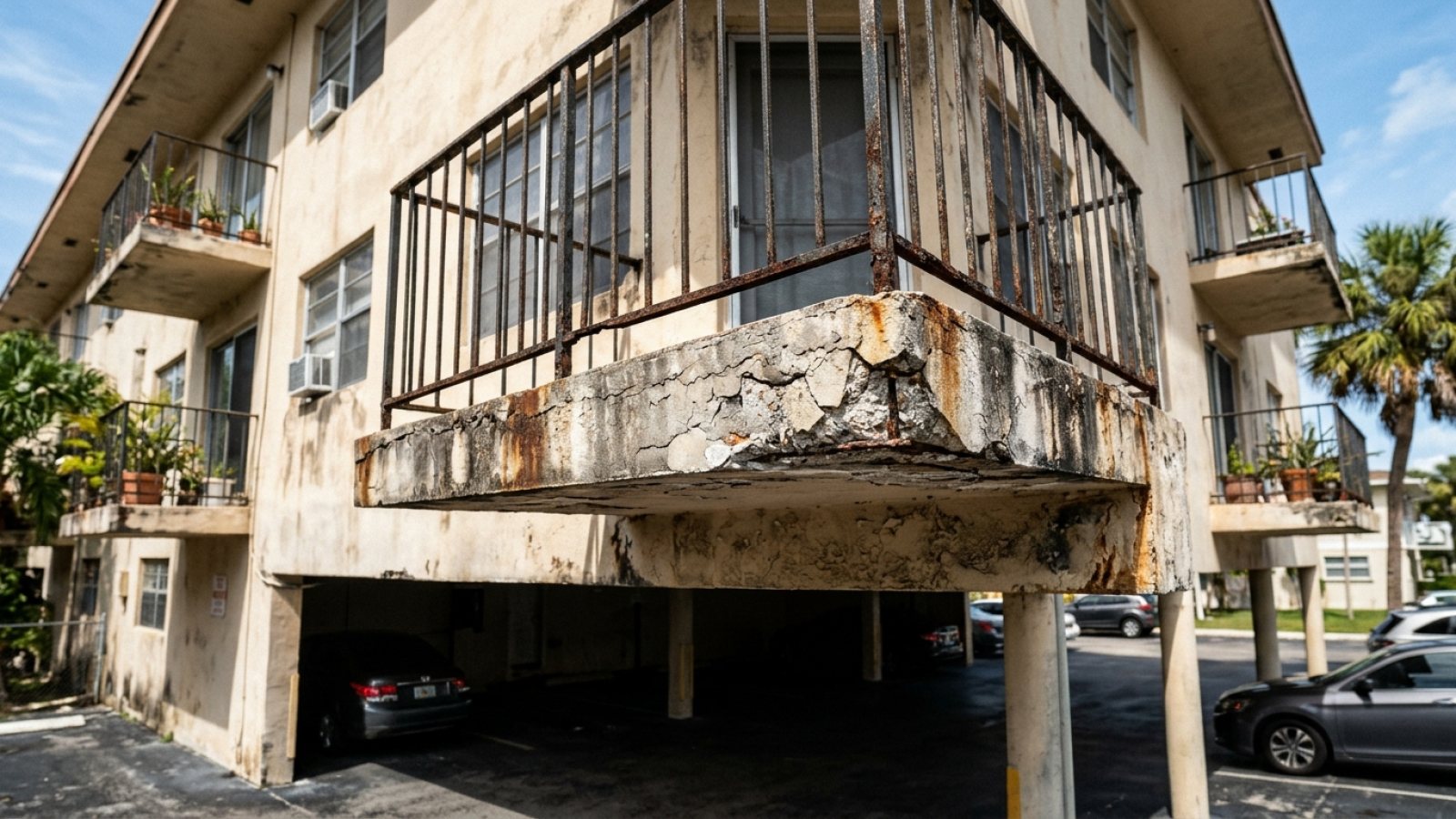
Balconies, Railings, and Garages: Understanding Your Building's Most Vulnerable Components
Certain parts of any building, especially in Florida's environment, naturally show signs of wear and tear sooner than others. Balconies, railings, and parking garages are often among the first to require close attention.
In South Florida's unique environment, some parts of a multi-family building are particularly susceptible to early deterioration, demanding proactive inspection and maintenance from condominium and co-op boards. While a building's entire structure is subject to aging, elements like balconies, railings, and parking garages often bear the brunt of environmental stressors and heavy use, showing signs of wear and tear sooner than more sheltered components.
Understanding why these specific areas are vulnerable is crucial for effective building management. Regular monitoring and timely action can prevent minor issues from escalating into significant structural concerns, helping to protect property values and, most importantly, the safety of residents.
Florida's Environment: An Accelerant for Aging
Our subtropical climate, characterized by abundant sunshine, high humidity, salt-laden air, and occasional intense weather events like hurricanes, is a powerful catalyst for material degradation. Concrete structures, metal reinforcements, and protective coatings are constantly challenged. The sun's ultraviolet rays break down sealants and paint, while humidity fosters the growth of mildew and corrosion. Airborne chlorides from the ocean infiltrate concrete, leading to the oxidation of embedded steel reinforcement bars, a process known as rebar corrosion or spalling.
When rebar corrodes, it expands, putting pressure on the surrounding concrete. This pressure causes the concrete to crack, flake, and eventually break away, exposing more rebar to the corrosive environment. This cycle accelerates deterioration, particularly in areas directly exposed to the elements. For boards, recognizing the relentless nature of these environmental factors is the first step toward developing a robust maintenance strategy.
Balconies and Railings: On the Front Line
Balconies serve as extensions of living spaces, offering views and outdoor enjoyment. However, their direct exposure to sun, rain, and salt air makes them highly vulnerable. The concrete slabs of balconies are constantly subjected to thermal expansion and contraction, which can lead to cracking. Water can then seep into these cracks, reaching the steel reinforcement inside, initiating the corrosion process. This is often visible as rust stains or sections of cracked and crumbling concrete.
Railing systems, whether metal or concrete, also face significant challenges. Metal railings are prone to rust, especially at their connection points to the building, which can compromise their stability and safety. Concrete railings can suffer from the same spalling issues as balcony slabs. Ensuring railings are securely anchored and free from corrosion is paramount, as they are critical safety features designed to prevent falls. Boards should prioritize regular visual inspections of these exposed elements to catch early signs of distress.
Parking Garages: Hidden Stresses and Constant Wear
Parking garages, often located beneath residential towers or as multi-level structures, endure a different set of stressors. Vehicle traffic, exhaust fumes, oil leaks, and constant vibrations contribute to their wear. Water intrusion from above – whether from pool decks, landscaping, or surface runoff – can seep through concrete slabs and expansion joints, leading to significant deterioration of the garage's structural components.
Unlike balconies, garages may not always show overt signs of damage on their surface. However, the underside of slabs, support columns, and beams should be regularly inspected for cracks, spalling, and evidence of water leakage. The corrosive elements carried by vehicles, like road salt (even if less common in Florida, other chemicals are present), and the constant moisture from washing cars or rain tracking in, create a harsh environment for concrete and steel. Maintaining effective waterproofing on levels above the garage and ensuring proper drainage within the garage itself are critical preventive measures.
Proactive Maintenance and Professional Expertise
Given the vulnerability of balconies, railings, and parking garages, a proactive approach to maintenance is indispensable. This includes regular visual inspections by maintenance staff, followed by more detailed assessments by licensed structural engineers as part of milestone structural inspections or county recertification programs. These professionals can identify subtle signs of degradation, recommend appropriate repairs, and provide guidance on long-term preventive strategies.
Boards should work closely with their licensed engineer to understand the specific needs of their building's components and to develop a comprehensive reserve study that adequately funds necessary repairs and replacements. Addressing issues early, rather than waiting for them to become critical, is almost always more cost-effective and helps ensure the structural integrity and safety of the entire property. For specific guidance regarding your building, always consult with a licensed engineer, your local building department, or a qualified attorney.
